



Precautions and Instructions for Installing LPG Conversion Kit in Summer
1、 Precautions during installation phase
——Avoid working in high-temperature environments
Do not install in open areas with direct sunlight at noon. LPG cylinders themselves are under pressure, and the internal pressure rises sharply at high temperatures, which greatly increases the safety risks of installation operations. It is recommended to choose shaded periods or indoor areas for construction.
——Strengthening inspection of sealing links
After installation, all interfaces (steel cylinder valves, pipeline joints, spray rail connections) must be checked for leaks with soapy water. High temperature expansion in summer can cause larger sealing gaps, and small leaks are more likely to cause danger. It is strictly prohibited to use open flames for leak testing.
——Compliance of installation position for steel cylinders
LPG cylinders should not be installed in high-temperature areas such as the chassis exhaust pipe or engine compartment. Adequate ventilation and heat dissipation space should be reserved, and the safety valve of the cylinder should be avoided from being obstructed to ensure smooth pressure relief.
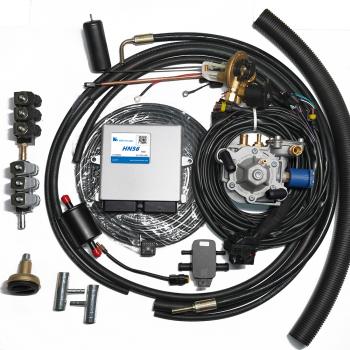
2、 Summer Daily Usage Instructions
Strictly prohibit vehicles from being exposed to direct sunlight
When parking for a long time, avoid exposing the vehicle to direct sunlight, especially in the trunk (where most LPG cylinders are installed) where high temperatures persist. When parking, try to choose a cool place to prevent abnormal pressure rise inside the cylinder from triggering the safety valve to release pressure.
——Daily compliant fuel switching
Following standard operating requirements, run the engine with gasoline for at least 20 minutes per day to lubricate the gasoline nozzle and valve seat. High temperatures in summer can accelerate the aging of rubber seals, while dual fuel use can extend the overall lifespan of the system.
——Regularly inspect aging components
High temperatures in summer can accelerate the aging of gas hoses and sealing gaskets. It is recommended to check the condition of the hoses every two weeks. If cracks, hardening, or looseness are found, they should be replaced immediately. Do not use them beyond their expiration date.
——Emergency response to leakage
If you smell the smell of liquefied petroleum gas, immediately pull over and turn off the engine. Cut off the power and close the manual shut-off valve of the gas cylinder. Before troubleshooting, switch to gasoline driving; If the leakage is too large to control, immediately evacuate to a safe area and call 119. It is strictly prohibited to switch on or off electrical appliances or use hot work on site.
——Long term parking disposal
If the vehicle needs to be parked for more than a week, try to use up the LPG in the gas cylinder as much as possible. Before reusing it after being stopped for more than six months, it is necessary to go to a qualified modification company for a comprehensive safety inspection to confirm that the sealing and pressure are normal before reuse.
3、 How to adjust the idle speed of the LPG conversion kit
Adjusting the idle speed of the LPG conversion kit requires completing preliminary preparations before proceeding step by step. The specific method is as follows:
—— Preliminary preparation
Switch the engine to LPG working mode, start the vehicle to warm up, wait for the coolant temperature to rise above 80 ℃, and ensure that the ignition system and gasoline idle are working properly to eliminate the impact of vehicle faults.
Confirm that the air-fuel ratio controller is in normal condition, and the device will display the mixture concentration through indicator lights to provide a basis for adjustment.
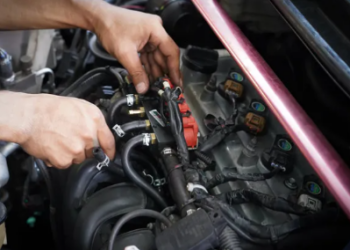
—— Step by step adjustment operation
Step 1: Adjust the idle screw of the evaporator pressure reducer
Maintain stable idle speed of the engine and slowly adjust the spring-loaded idle adjustment screw on the evaporative pressure reducer until the indicator light of the air-fuel ratio controller starts flashing, indicating that the mixture concentration has reached a normal state.
Step 2: Lock the idle speed range
If the speed is still not within the standard range after adjusting the idle screw, fine tune the adjustment screw with the locking nut to stabilize the engine idle within the standard range of (850 ± 50) r/min.
Supplementary adjustments for special structural vehicle models:
For the new mixer with air bypass structure, the air adjustment screw on the bypass of the secondary chamber throttle valve can be used to assist in adjustment. If the idle speed cannot be stabilized at 400-850r/min, it is necessary to first check whether the air filter and evaporator are clogged with carbon deposits, eliminate the fault, and then adjust.
—— Verified after adjustment
After the adjustment is completed, the test shows that there is no idle running or stalling for 3-5 minutes. During the process of switching to gasoline/LPG mode, there is no significant fluctuation in idle speed. After rapid acceleration/deceleration, the idle speed can quickly fall back and stabilize, indicating that the adjustment is complete.
Refer to:https://www.wikihow.com/Install-an-LP-Gas-Conversion-Kit
The pictures and articles are from the internet. If there is any infringement, please contact us to delete them.
Popular articles
-
How the CNG Automotive S
Compressed natural gas (CNG) automotive systems
-
Advantages Of CNG Gas V
Compressed natural gas vehicles are vehicles th
-
What Is CNG Pressure Red
The pressure reducer of natural gas vehicle is
-
Reasons For High Gas Con
1. Original vehicle condition A. The tec
-
Differences Between Sing
Characteristics of Gas Single Point Device
-
How To Improve The Power
1. Install ignition advance angle What i
-

How The CNG Gas Vehicle
If you want to know – how does the CNG conversi
-

Advantages And Principle
LPG and CNG are two mainstream alternati





Latest comments
0piece comment
no comments, welcome to comment。