



Principles for selecting CNG conversion kits for oil to gas vehicles
The core principle of selecting CNG conversion kit is that compliance adaptation is the premise, hardware safety is the bottom line, performance matching needs are guaranteed, after-sales commissioning is guaranteed, and blind pursuit of low prices will not lead to frequent subsequent failures and prominent security risks.
1. Principle of emissions and compliance adaptation
(1) Priority should be given to selecting the corresponding emission version of the kit: National VI vehicle models must use the National VI dedicated CNG kit, whose ECU supports dual fuel independent OBD diagnosis, can accurately control the air-fuel ratio, fully adapt to the original vehicle emission monitoring logic, and avoid frequent reporting of fault codes and failure to pass annual audits due to non-compliance with exhaust standards after installation.
(2) Reject inventory of old National V kits: The hardware appearance of the National V kit is similar to that of the National VI version, but the electronic control program is not compatible with the National VI OBD system. After installation, it is prone to emission alarms, power abnormalities, and other problems, making it completely unsuitable for current mainstream National VI models.
(3) Confirm the compatibility of the kit with the vehicle displacement: For 4-cylinder household small displacement models, conventional passenger car kits should be used. For 6-cylinder and above commercial vehicles and heavy-duty trucks, specialized kits with high flow gas supply structures must be used. Small flow private car accessories cannot be directly used to avoid insufficient gas supply under high load conditions.
2. Core hardware security and reliability principles
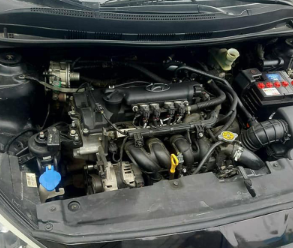
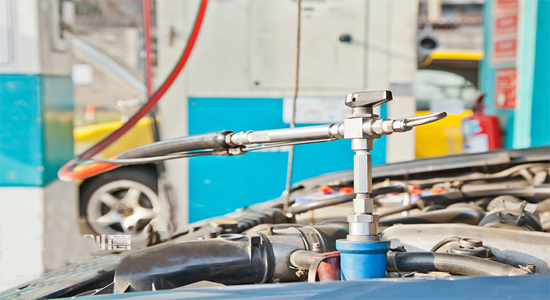
(1) The core components must comply with safety standards: high-pressure pipelines and tube fittings must adopt multi line contact sealing design to maintain reliable airtightness under high pressure conditions of 275 bar, eliminating the risk of gas leakage.
(2) The joint components need to have strong anti vibration performance: a joint with a double sleeve hinge clamp clamping structure is selected, which will not loosen even under continuous bumpy vibration of the vehicle, and is suitable for the harsh environment of long-term operation of the vehicle.
(3) The kit must be validated by market maturity: new kits that have not been tested in real vehicles for a long time should not be selected. Priority should be given to mature products that have been widely used in taxis and commercial vehicles and have been validated through market deployment, avoiding using one's own vehicle as a test item.

3. Performance and working condition matching principle
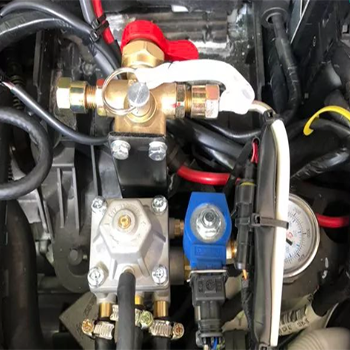
(1) Priority selection of sequential injection structure kit: equipped with high-precision sequential injection gas injection rail, high injection accuracy, fine gas atomization, suitable for China VI fine combustion control requirements, wear-resistant and not easy to block, greatly reducing power attenuation amplitude.
(2) Adapt pressure regulator to local working conditions: Choose a large flow stabilizing pressure regulator to ensure stable pressure regulation under high and low temperature conditions. In response to the differences in natural gas quality in different regions such as Sichuan, optimize gas supply parameters while ensuring power performance and gas economy.
(3) ECU has dynamic calibration capability: Priority should be given to brand kits with independent research and development calibration capabilities, which support fine-tuning of air-fuel ratio and ignition advance angle according to different engine models, enabling coordinated matching of gas pressure, intake flow rate, and ignition timing, achieving stable idle speed and high RPM power without fatigue.
4. After sales and maintenance guarantee principles
(1) Confirm supporting technical debugging services: Priority should be given to kit brands that can provide remote technical support. In case of fault codes, assistance can be provided in reading data streams and recalibrating parameters to avoid the dilemma of unmanned debugging after problems occur.
(2) Clarify the warranty rights of core components: The main kit is required to provide at least 1 year of warranty, and all parameter debugging services during the warranty period are free of charge, reducing maintenance costs for long-term use in the future.
Avoiding pure trade intermediaries: Priority should be given to connecting with source brands that have been deeply involved in the gas equipment industry for many years and have a large number of actual vehicle matching cases, to ensure long-term stable supply of vulnerable parts in the future, without the problem of parts being unable to be repaired after supply interruption.
Refer to:https://www.acko.com/car-guide/cng-car-maintenance-and-safety-guide/
The pictures and articles are from the internet. If there is any infringement, please contact us to delete them
prev:Introduction To LPG Conversion Kit
next:nothing
Popular articles
-
How the CNG Automotive S
Compressed natural gas (CNG) automotive systems
-
Advantages Of CNG Gas V
Compressed natural gas vehicles are vehicles th
-
What Is CNG Pressure Red
The pressure reducer of natural gas vehicle is
-
Reasons For High Gas Con
1. Original vehicle condition A. The tec
-
Differences Between Sing
Characteristics of Gas Single Point Device
-
How To Improve The Power
1. Install ignition advance angle What i
-

How The CNG Gas Vehicle
If you want to know – how does the CNG conversi
-

Advantages And Principle
LPG and CNG are two mainstream alternati





Latest comments
0piece comment
no comments, welcome to comment。